 MindBearing
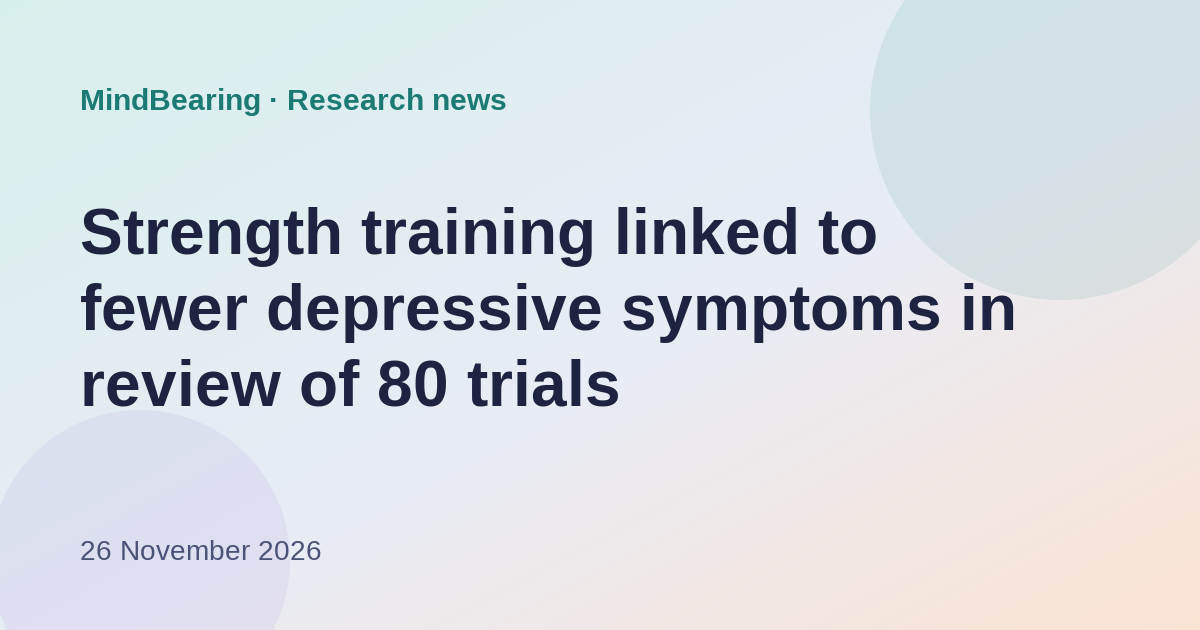
Exercise is often mentioned as something that can help with low mood. A new review has looked specifically at resistance exercise, also called strength training, which means working your muscles against a weight or other resistance. It asked how this type of exercise compares not only with doing nothing, but with other activities, including aerobic exercise such as walking or cycling.
The study was published in JAMA Network Open on 16 November 2026. It was led by Darragh O'Sullivan of the University of Limerick in Ireland, with senior author Matthew Herring, also of the University of Limerick, and researchers at the University of Wisconsin-Madison, the Kessler Foundation in the US and the Health Information and Quality Authority in Dublin.
What was studied
This was a meta-analysis, which pools the results of many earlier studies. The researchers searched five databases up to 7 July 2025 for randomised clinical trials that ran resistance exercise for at least three weeks and measured depressive symptoms with a validated questionnaire.
Resistance exercise was compared with two kinds of groups:
- Active comparisons, such as aerobic exercise, relaxation, flexibility work, mind-body exercise, nutrition, education and balance exercises.
- Inactive comparisons, such as no treatment, waiting lists and continued usual care.
The final analysis included 80 trials with 6,123 participants. Their average age was 57, and 67.1% were female. In 57 of the trials, participants had an illness, and not all participants had depression.
What it found
The researchers measured results as a standardised "effect size", where bigger numbers mean a larger difference in symptoms between the groups.
- Across all comparisons, resistance exercise was linked to a reduction in depressive symptoms with an effect size of 0.32, which the authors describe as small.
- Compared with inactive groups, the effect size was 0.54, which they describe as moderate.
- Compared with active groups, it was 0.21. Against aerobic exercise specifically, it was 0.23.
- Compared with active groups, the difference was larger in people with a mental illness (0.40) than in people without one (0.11).
Put another way, the authors estimated that across all comparisons, one additional person in every seven who did resistance exercise would see a meaningful improvement.
The authors concluded that their findings support recommending resistance exercise in the treatment of depression, particularly when people prefer a behavioural approach.
What it can't tell us
The results varied a lot between trials, so the overall numbers hide a wide range. Some tests suggested publication bias, meaning studies with positive results may be more likely to have been published.
Trials that did not properly conceal which group people would be put into showed larger effects, and many trials did not report attendance, how well people stuck to the exercise, or side effects. Only 26 trials continued resistance exercise for longer than 12 weeks, and only one of those involved people with diagnosed depression. The authors also warn that the findings about who benefits most should be read cautiously, because these were comparisons between trials rather than tested directly.
Many participants had physical illnesses or were older adults, so the results may not apply equally to everyone.
The study was funded by Research Ireland, the US National Institute on Aging and the US National Institute of Mental Health. The authors reported no conflicts of interest.
Practical context
The following are general points, not findings of the study:
- If you have a health condition, or have not exercised for a while, it is sensible to check with a doctor before starting a new exercise routine.
- Exercise is not a replacement for professional support. If low mood is lasting for weeks or affecting your daily life, talk to a doctor or qualified professional.
If you would like to reflect on your mood over the past two weeks, MindBearing's Depression Test is a short screening questionnaire for self-reflection. It isn't a diagnosis.